At the time of the 2023 Africa Cup of Nations (AFCON), I lived in a shared house of six. Nested in the living room was a television we never watched and rarely saw, as if locked away like a precious jewel. In reality, more like an abandoned relic. But I needed to watch the Nigeria versus Ivory Coast football finals. The former was a country of sour winners, figuratively beating down opponents who already had a loss to contend with. And its not-so-distant neighbours, Ghana, bore the brunt of it after their encounter. Ghana and Nigeria have been casual rivals for a very long time, you see. And as a Nigerian, I can confirm we have better musicians, footballers, and, of course, jollof rice. For Ivory Coast, or Côte d’Ivoire, it was to be a story written in the stars—that the host country would lift the trophy on its home soil. And a bigger story for centre-forward Sébastien Haller, who only resumed footballing duty after a six-month battle with cancer. For the first time, I strolled into the pub, two minutes from my house, to watch this final that I have since banished from my memory because it only ended sourly—who cares about winning anyway?

During extra time, when it was clear we would not celebrate triumph, a young man (about thirty years old, standing at six feet three inches) entered my orbit. He introduced himself as a local, a resident of the area, although he worked in London. I indulged him. As a delicate foreshadowing,  he reintroduced himself, self-proclaiming to be a well-meaning White man. He meant well when he told me—a begrudging descendant of British colonialism—that he was proud of ‘Empire’ (the British Empire, not to be confused with the American drama series). He was proud that this small island with no right to conquer so many nations did so anyway by sheer ingenuity. He meant well throwing the word ‘nigga’ in my face, but “I swear” only for illustrative purposes. “Sorry if that was offensive”, he apologised, hand on chest to emphasise the point. After all, he was well-meaning. His masquerading politeness couldn’t have seen the irony if it wrapped itself in boxing gloves and uppercut him at the chin. This idea of Whiteness—that if you acquired something or someone, by hook or crook, it was yours always to be proud of—never presented itself to me so clearly before that woeful evening. Whiteness was a religion, not of believing in a higher power, but of oneself. And its faith was spurred into action by the mere knowledge of indigenous people elsewhere, the musty scent of a nearby sea, or a common fly on the wall.

I left the pub with a lump in my chest, and when it settled, I made a vow; that I would never again argue with a White person about race (more than a year later, I discovered a coincidental twin-speak—Reni Eddo-Lodge’s Sunday Times Bestseller, ‘Why I’m No Longer Talking to White People About Race’). To do so would be to believe that the White man will turn a new leaf, and by extension, to engage in a useless faith—evidence of things I have never seen, nor do I believe to see in my lifetime. What is ‘White culture’, if not plunder and pillage persevering?

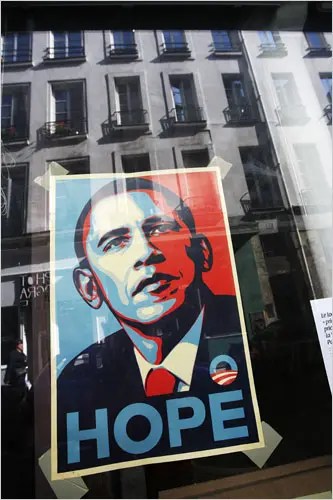
In 1865, slavery was abolished in the United States. That is eighty-nine years after the Declaration of Independence, which was supposed to grant unalienable rights to all men, was signed. America became a democracy in 1791, but the Voting Rights Act (prohibiting racial discrimination in voting) was only signed into law in 1965 by President Lyndon B. Johnson. How does it track that a fully democratic state stripped certain rights away from certain citizens? So, remind me, it was democracy for which people, and by which people? In 2009, Barack Obama became the first Black President of the United States. Eight years later, the first White President, according to writer Ta-Nehisi Coates, was elected. Not for his intelligence or presidential disposition, of which he has neither, but as a form of reparations, I’d argue, is still being paid. I point to the United States because no other country monickers itself, or at least not as noisily, to be the ‘land of the free’. It’s meant to be the pinnacle of democracy and the rules-based order. And yet, there is overwhelming evidence of a moral tug of war; for every pull forward, there is a corresponding tussle, yanking in a counter direction.

Some of the criticism levelled against Obama during his presidency was for his ‘blind faith’. And dare I say, the audacity of his hope—the same one that got him so far but allowed him to see so little. He saw hope in the people constantly questioning the legitimacy of his office, birth, and whether he deserved basic dignity. Still, he had the audacity of hope, to dream that America could rise to something more than itself—The American Dream; a country where unalienable rights are truly granted to all men. But like all religions, Whiteness believes there is no one equal to, no one as deserving as god. Whiteness will stop at nothing to proclaim a gospel that only leaves a trail of plunder and pillage, and ravaged people in its wake.
EYIMOFE-AT-LARGE
“We write to taste life twice, in the moment and in retrospect.” – Anaïs Nin

 EYIMOFE-AT-LARGE